












Amazon PPC management means planning, running and optimizing a brand's Sponsored Products, Sponsored Brands and Sponsored Display campaigns so ad spend grows profit, not just sales.
What sellers say after hiring a PPC agency or freelancer
Real comments from Amazon sellers in online seller communities.
Misaligned incentives
“The 10% monthly spend model creates a weird incentive structure where agencies get paid more simply because you spend more, regardless of profitability.”
“I have heard of agencies charging a % of total revenue, even if it has nothing to do with the ads.”
“My ad agency kept blaming 'creative fatigue' to upsell me on a separate $2k/month creative package.”
Poor strategic focus
“Ads don't work in a vacuum; if your main keywords aren't indexed properly or your listings are weak, ad spend gets wasted fast.”
“Optimizing to campaign ACOS instead of TACOS... A campaign at 40% ACOS that lifts organic rank can be more profitable than one at 20% ACOS that doesn't.”
“Mixing high and low search volume keywords in the same ad group... High-volume terms need their own campaigns with their own budgets.”
Execution and transparency
“After onboarding, the account gets handed off to an overseas manager with limited attention.”
“No agency ever showed me a scorecard of their own calls.”
“Make sure you own the ad accounts and have full access. Some agencies set things up under their own accounts and you lose all your campaign history if you leave.”
Pricing and value
“At 2 products though, you're being quoted agency prices for a workload that mostly isn't there yet.”
“The 10% of spend model has a conflict of interest built in.”
“Freelancers can be hit or miss.”
Most of these aren't bidding problems. They're incentive and accountability problems.
Ads don't work in a vacuum. Most PPC managers run them like they do.
PPC amplifies what's already on the page. If your main keywords aren't indexed, your main image loses the click, or you're three weeks from a stockout, more spend just buys more expensive failure. Most PPC agencies and freelancers only look at the ads console, so every problem looks like a bid problem.
That's like turning up the music because the car is making a noise.
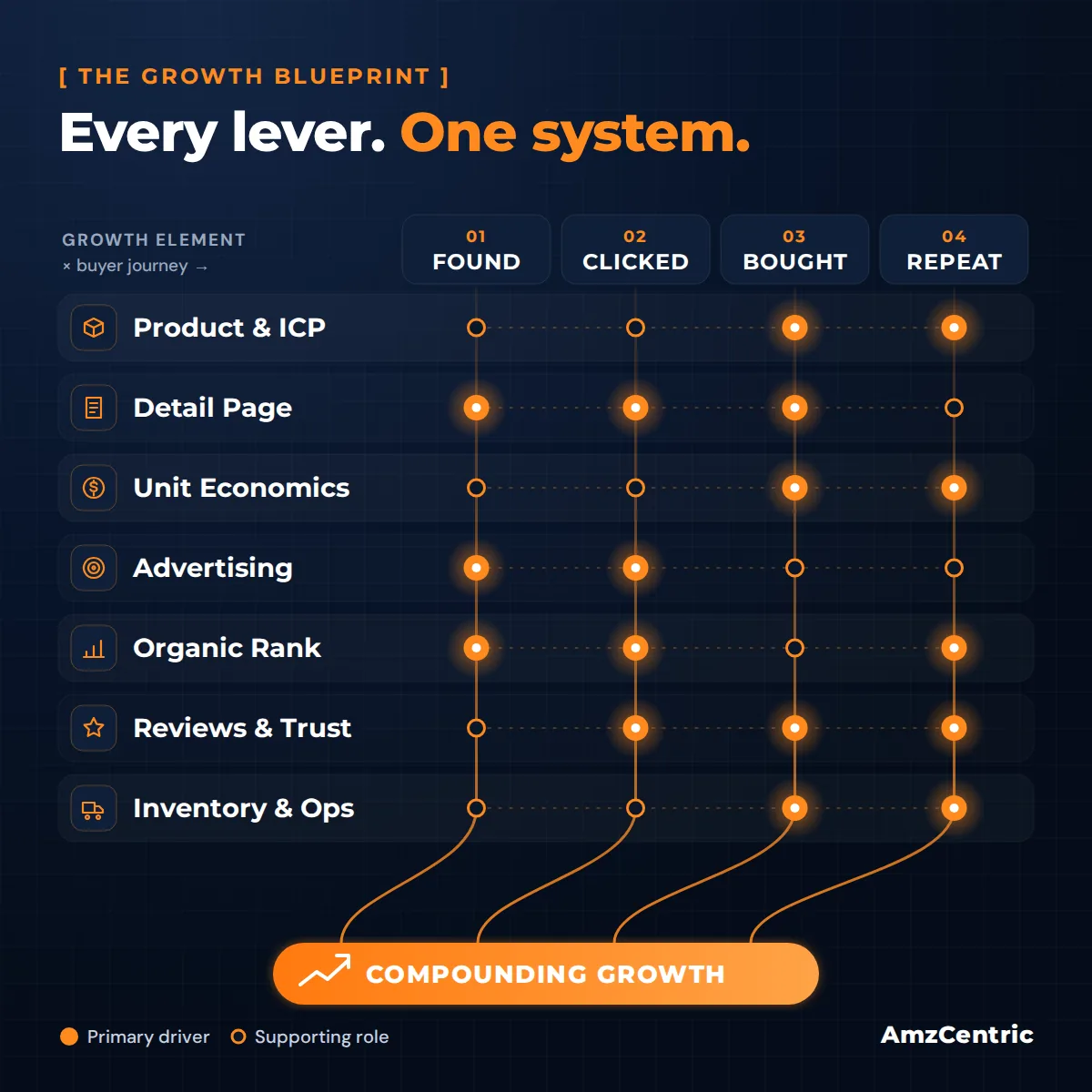
How AmzCentric runs Amazon PPC management differently

Flat fee. Never a percentage of your spend.
Managed to TACoS and profit, not campaign ACoS.
Ads and the listing, worked together.
Structure built around search volume.
A scorecard of our own calls.
Your ad account, your data, a senior team.
Weekly report, plus Slack or WhatsApp for day-to-day questions.
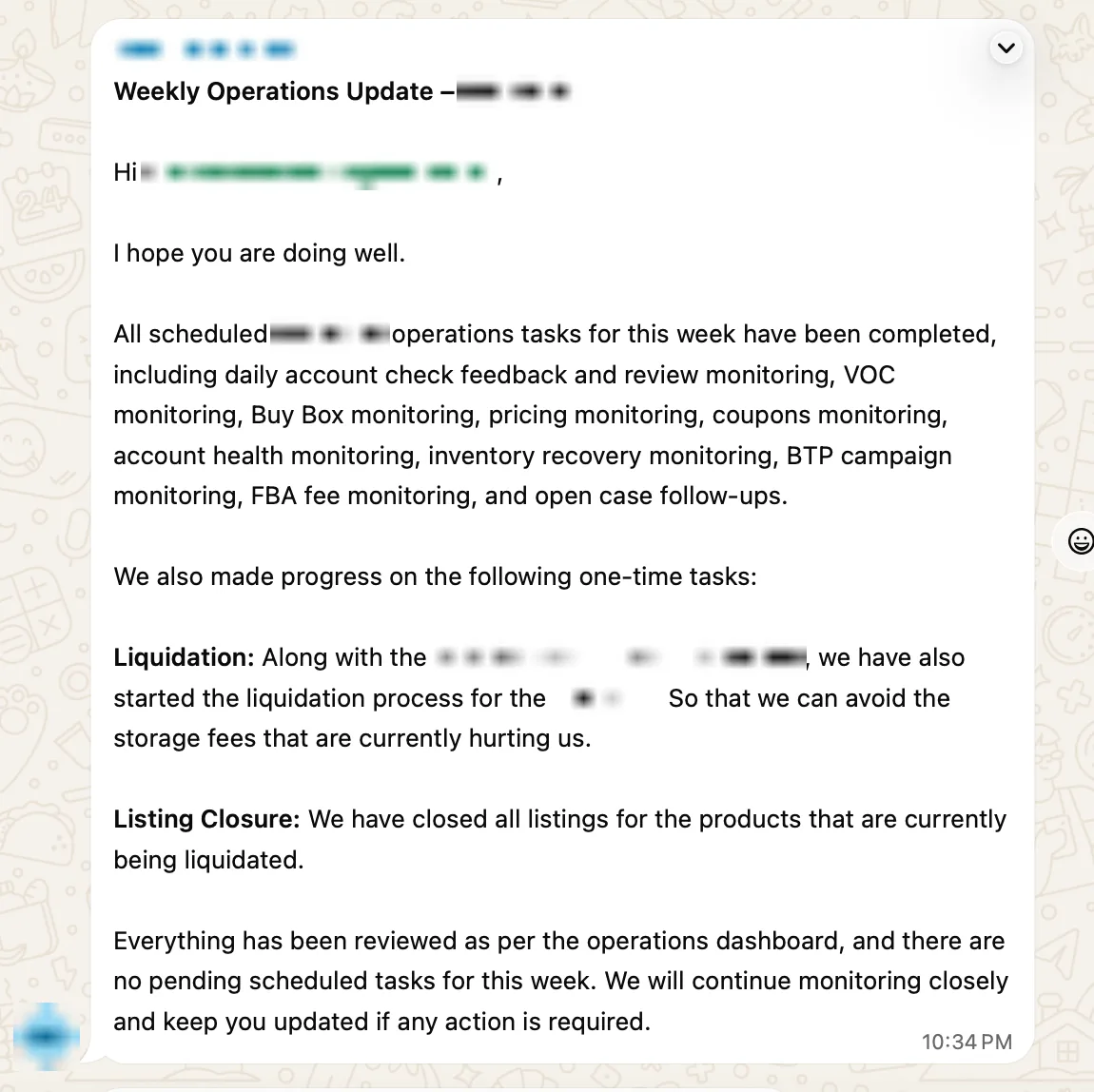
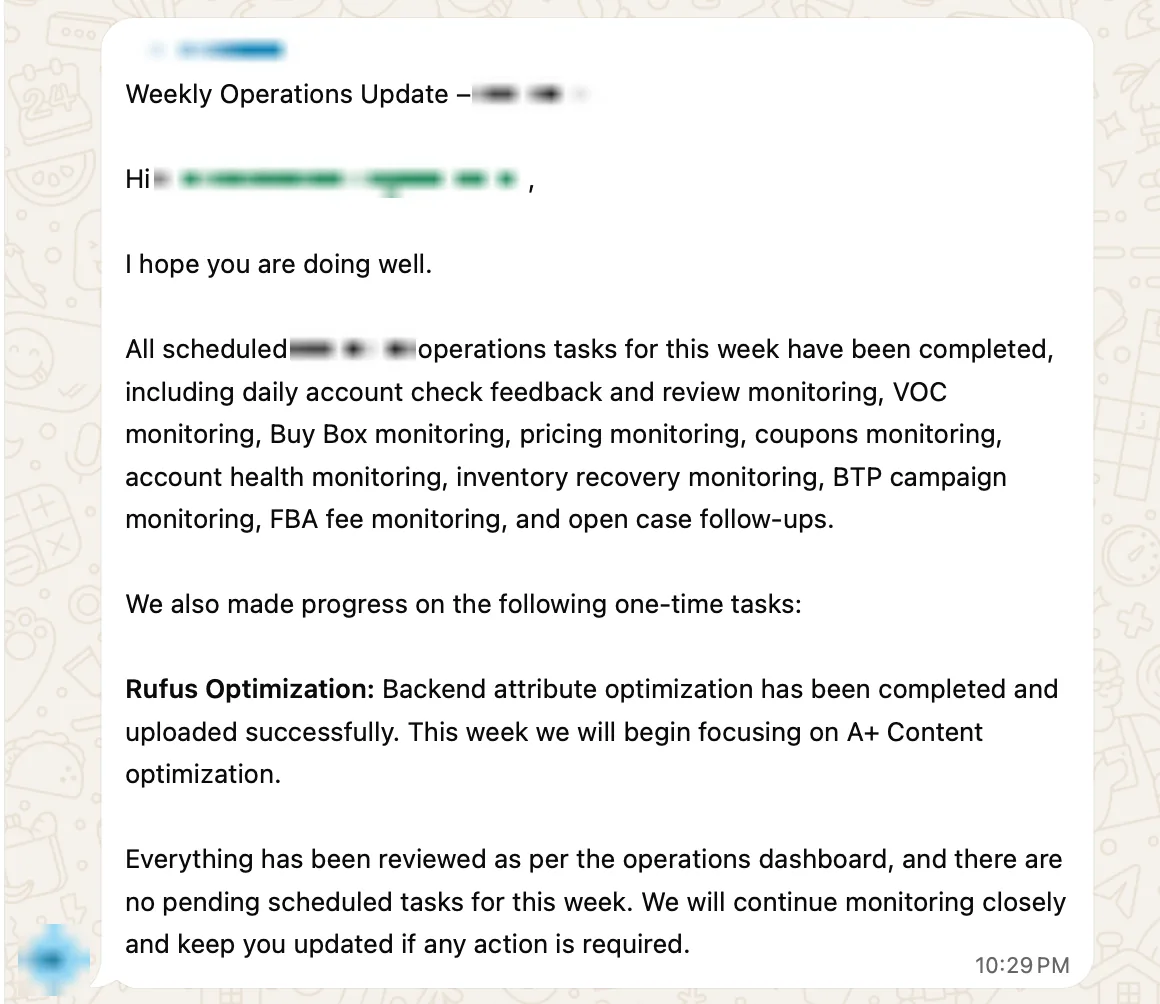
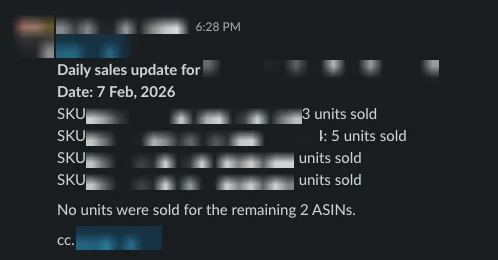

Flat monthly fee. We don't charge a percentage of your ad spend, because that pays an agency to spend more of your money.
Amazon PPC management services: what we run for you
Amazon PPC optimization across every ad type, every week, reported against your profit.
Campaign structure & keywords
Bids, budgets & placements
Search terms & negatives
Every Sponsored ad type
Creative testing with PickFu
Reporting & accountability
Not included: ad spend (paid by you directly to Amazon), product sourcing, photoshoots.
Your Amazon PPC strategy: the first 90 days
Brand Audit and targets
We audit campaign structure, bidding, search term waste, keyword indexing and the listings your ads send traffic to. Then we agree your targets in writing.
Stop the waste
Add negatives, pause what isn't paying back, remove duplicate targeting, and flag the listing issues that make clicks expensive.
Rebuild the structure
Give high-volume terms their own campaigns, split by match type and intent, and test main images and creative with PickFu.
Scale what's profitable
Push budget into what's paying back, plan promotions, and review results against the targets we agreed. This is your guarantee checkpoint.
Every week along the way, you get a report on what we changed and what it did to your numbers. See a sample weekly report →
We hit at least 80% of your targets, or you stop paying our fee.
Most agencies promise the world on the sales call. We'd rather put it in writing.
Before we start, we agree specific targets with you, based on your account, your margins and your market. We work together for a minimum of 3 months. If we haven't hit at least 80% of those targets by then, you don't pay our management fee from the next month on. It stays waived until we hit them.
Ad spend is always paid by you directly to Amazon and isn't covered by the guarantee. Targets are agreed in writing at onboarding. The guarantee applies to our monthly management fee.
Who we work with (and who we don't)
A good fit if you:
Own your brand on Amazon and do at least $10K a month
Pay a percentage of ad spend today and suspect it's working against you
Want ads judged on TACoS and profit, not campaign ACoS
Want to see the reasoning behind every change
Are willing to share COGS and margin data, so we can set break-even targets
Not a fit if you:
Resell other brands' products without owning the brand
Want sales growth at any cost, whatever it does to margin
Want the cheapest bid-adjuster you can find
How to choose an Amazon PPC agency: 7 questions to ask before you sign
Ask every agency these, including us. The answers tell you more than any case study.
“How do you charge?”
A percentage of ad spend pays the agency to spend more. A percentage of total revenue charges you for sales the ads didn't drive.
“Who runs my account after onboarding?”
If it's not the person on the sales call, find out who it is and how much Amazon experience they have.
“Do you manage to ACoS, TACoS or profit?”
Campaign ACoS on its own can look great while the business loses money. Ask for break-even ACoS per SKU and TACoS.
“Show me a weekly report.”
It should be a scorecard of their own calls: what they changed, why, and what happened after.
Here's ours →“How do you structure campaigns?”
High-volume terms need their own campaigns and budgets. One ad group for everything is a red flag.
“Will you look at my listing before scaling spend?”
Ads don't fix unindexed keywords or a weak main image. They just pay for traffic that doesn't convert.
“Whose account are the campaigns in?”
Yours. If campaigns sit under the agency's account, you lose the history when you leave.
Don't take our word for it
Profit-focused, very responsive
“I have been working with Zain and his team for about 4 months. I made the switch from another agency that was more marketing-focused, and have found AMZCentric to be laser-focused on growing profit. They have completely rebuilt my Amazon Ads campaigns and experiment every week to make incremental improvements. Even though I work US hours, the team responds very quickly to my inquiries.”
“Have tried many sellers. But the value Zain and his team AmzCentric added to my advertising is far better than others. It's been a month with Zain and my sales have increased by 30%. Highly recommended.”
“From our initial conversation, Zain demonstrated a profound understanding of Amazon PPC's complexities. His audit was nothing short of eye-opening.”
“Productive discussion on growth. Zain and his team are also working on my PPC and he is doing a very good job in controlling my spend.”
“I have contacted Zain a third time. He is very intelligent and has vast experience in Amazon PPC. I highly recommend him as a PPC consultant.”
“Impressive guy with tons of PPC knowledge. Highly recommended.”
Amazon PPC management: common questions
Find out where your ad spend is leaking
We go through your campaigns, search terms, listings and inventory, and show you exactly what we'd fix first and what it's costing you now. You keep the findings, whether you work with us or not.
Get your Brand Audit
Tell us about your brand. We'll review your ads, listings, account health and inventory, then show you where profit is leaking.
Thanks, we've got it.
What lands in your WhatsApp or Slack
A weekly report on what we changed, why, and what it did to your numbers. Between reports, daily sales updates and anything we spot, like a fee mismatch worth a reimbursement claim.